Female hair loss and balding is undoubtably much less common than male hair loss. Not only is it a psychologically damaging and distressing experience for a woman, it’s long lasting and often depressive effects can be completely devastating on her life. Yet it’s not just the actual thinning that can be poignant and painful, there is also the actual reasons, or not knowing the reasons, behind the problem that can cause anguish in itself.
Hair transplants for women are a completely different picture to that of male restorative hair surgery. Generally, men experience hair thinning in a relatively predictable pattern and with an almost unanimously calcuable reason. Women, however, generally lose their hair for a multitude of different reasons and because of it, to find a suitable solution, a surgeon ideally needs to know the underlying cause.
The explanation can come in a variant of shapes and sizes from lack of suitable nutrition to stress issues right through to hormonal irregularities or alopecia. For females it is absolutely critical that, before making a decision about a hair transplant, it is discussed in depth with her medical professional. It’s fundamental that the cause of the given hair loss is discovered before any decision is made by both patient and surgeon alike. You may discover that a course of medication is a more suitable solution to complete restoration in the form of a hair transplant. Whatever the case, it’s vital that the cause is determined from the very outset.
Which type of transplant is most suited to female hair loss?
If it is deemed that a surgical transplant is the best option, then one of the most successful ways to restore hair to it’s natural form would be by Follicular Unit Extraction, or FUE. It not only produces minimal scarring but it is also the most non-invasive form of surgery.
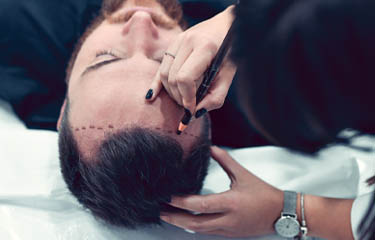
Follicular unit extraction takes individual hair follicles from specific donor areas using a specialized instrument that is a microscopic needle, individually designed for the process. Your surgeon will subsequently graft those individual and extracted units in stragetic zones taking precise care and attention to establish the correct angle and alignment. The procedure is completed under a general anesthetic and offers a non invasive solution to hair loss problems.
Following on from surgery, the complete medical post-operative recuperation period is a rapid 3 or 4 days with a final further 6 to 8 months before a difference begins to show and your natural hair begins to fully recover.
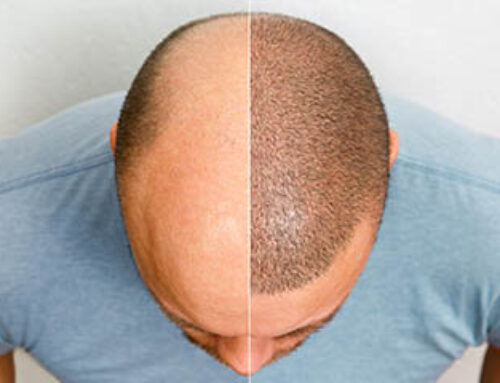
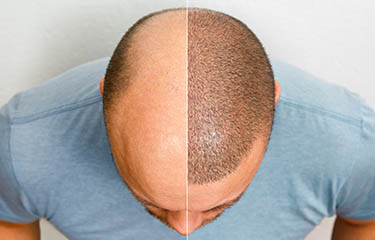
Women Hair Transplants Before & After
.-13253″ href=”https://hair.toppromediagroup.com/wp-content/uploads/2015/05/1-Before1.jpg”>